

The Free Riverbank and the Road That Runs Its Length
Contents5 sections
Before 1885, the strip of land along the Canadian side of the falls was known as the Front, and it was not public land. Rival museums held the best vantage points and sent touts out to pull visitors in, each one competing for the same crowd walking toward the water. It was a tourist trap in the literal sense: getting close to the falls meant paying someone first. A visitor arriving by train or carriage had to run a gauntlet of competing operators before reaching a clear view of the water, and there was no free stretch of bank where that transaction could simply be skipped.
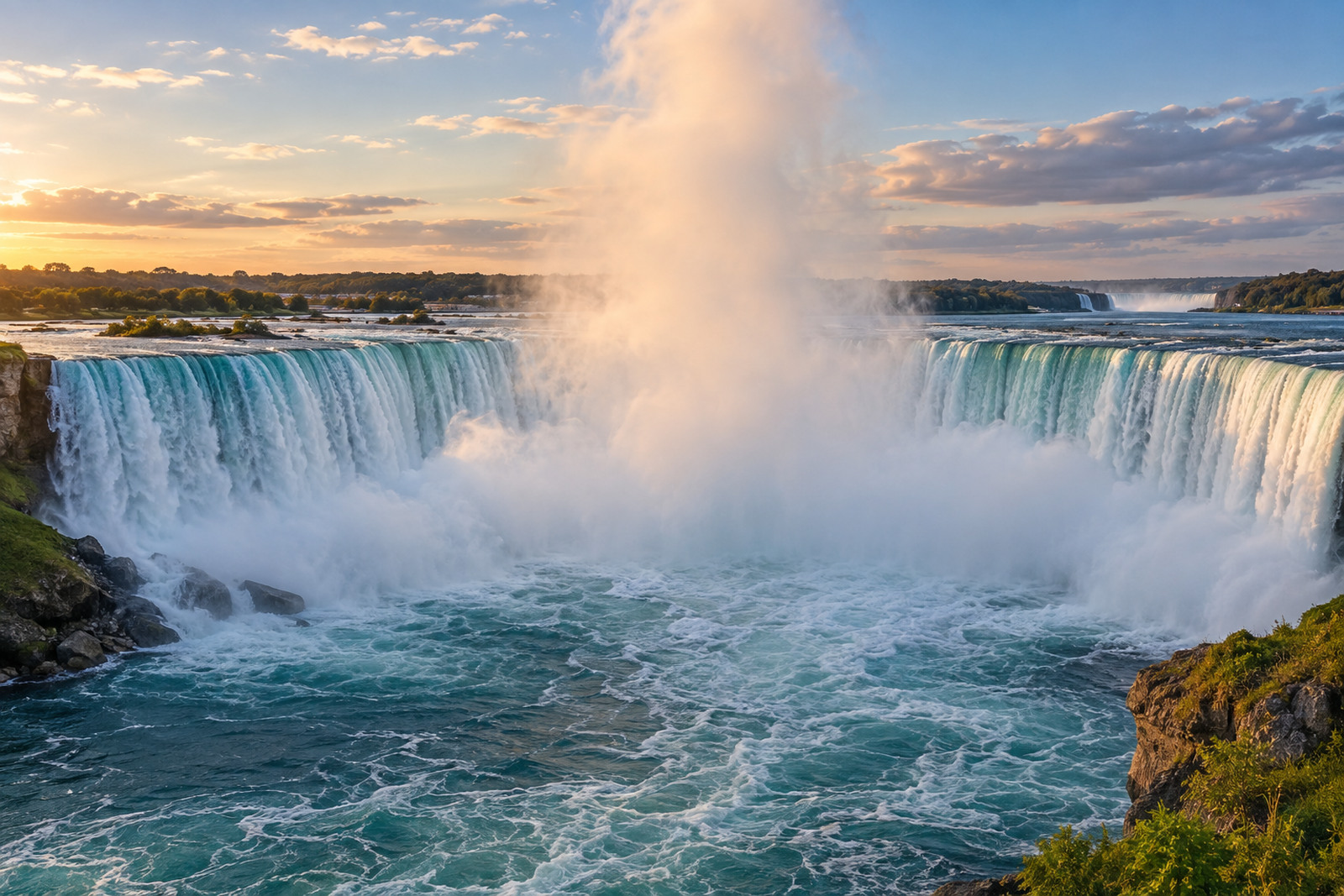
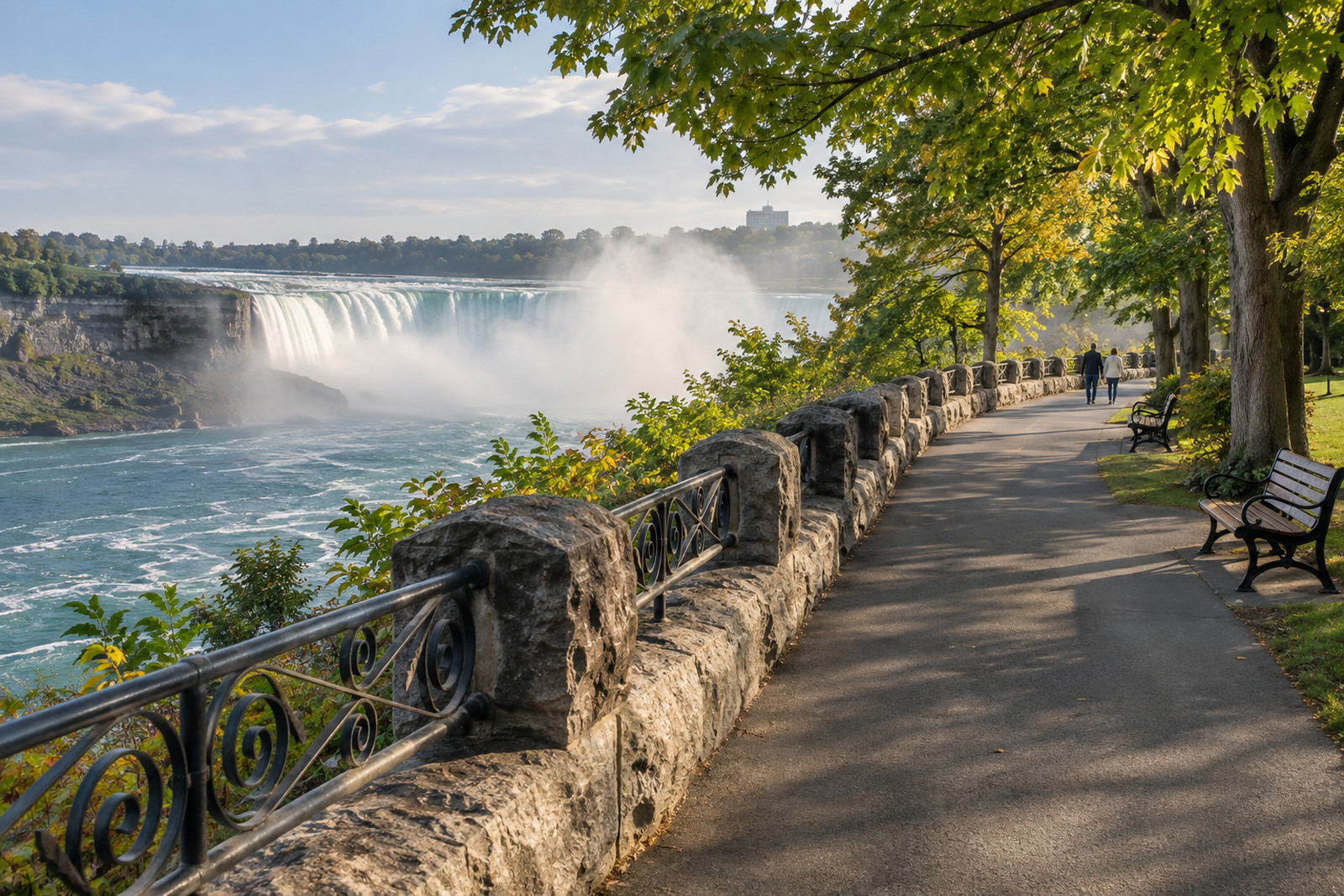
The idea of a public park went back to 1873, when Edmund Burke Wood first proposed one. It took until 1885 for a commission to actually be created, and Queen Victoria Park opened on 24 May 1888. The founding principle carried through from that commission to the park it built: access to the park and to the view is free. That single rule is the reason the Canadian bank still costs nothing to walk today, even as paid attractions cluster around it.
What the commission actually fixed
The problem the 1885 commission solved was not scenery, it was access. The museums along the Front had turned the closest views of the falls into a paid transaction, and the commission's job was to take the land back into public hands and set a rule that would outlast any single operator. Queen Victoria Park, opened three years later in 1888, was the result: a strip of riverbank where standing to look at the water cost nothing, by design rather than by accident. That design decision is easy to take for granted now, since it has held for well over a century without being reversed even as the falls turned into one of the busiest attractions on the continent.
The road that grew out of the park
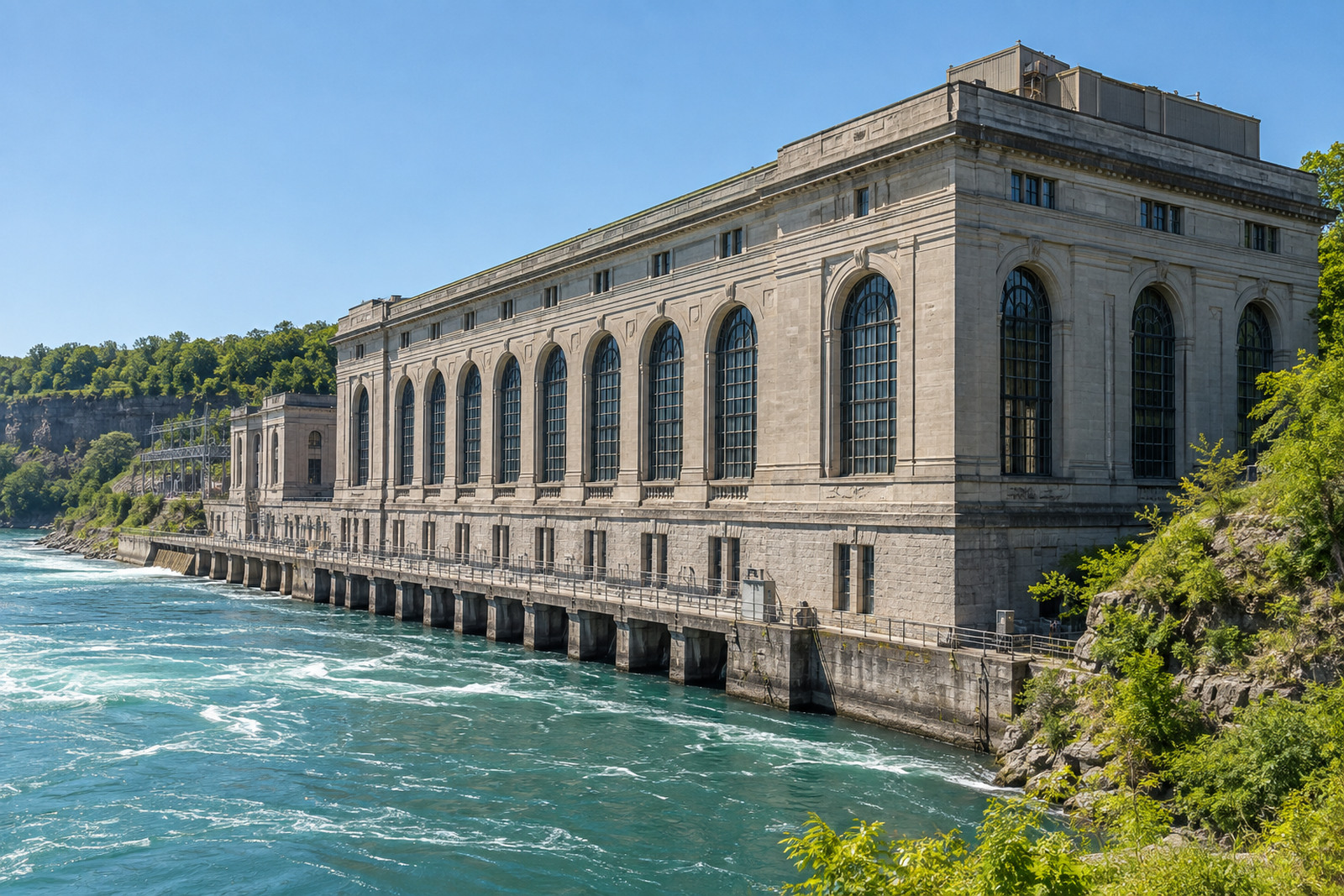
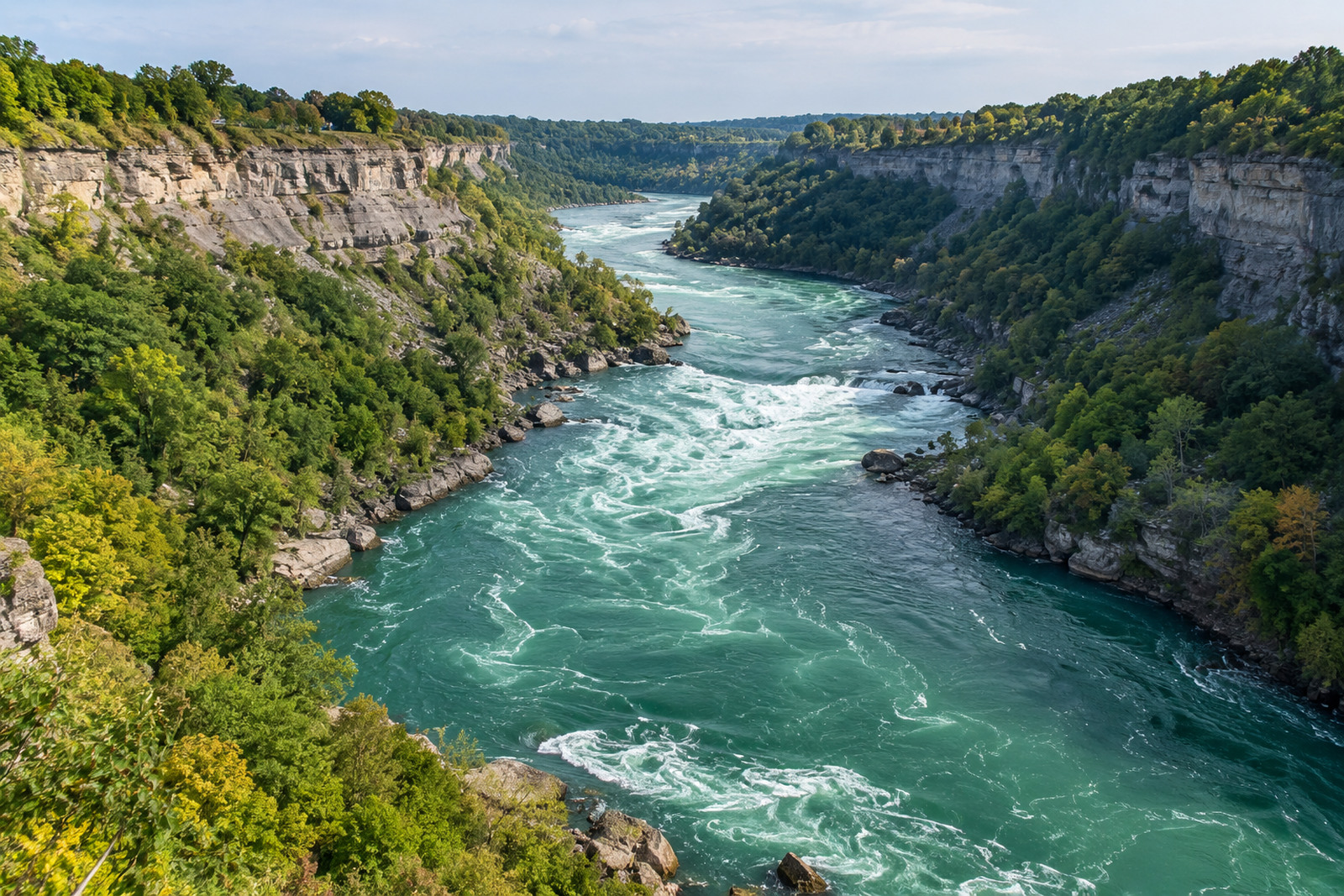
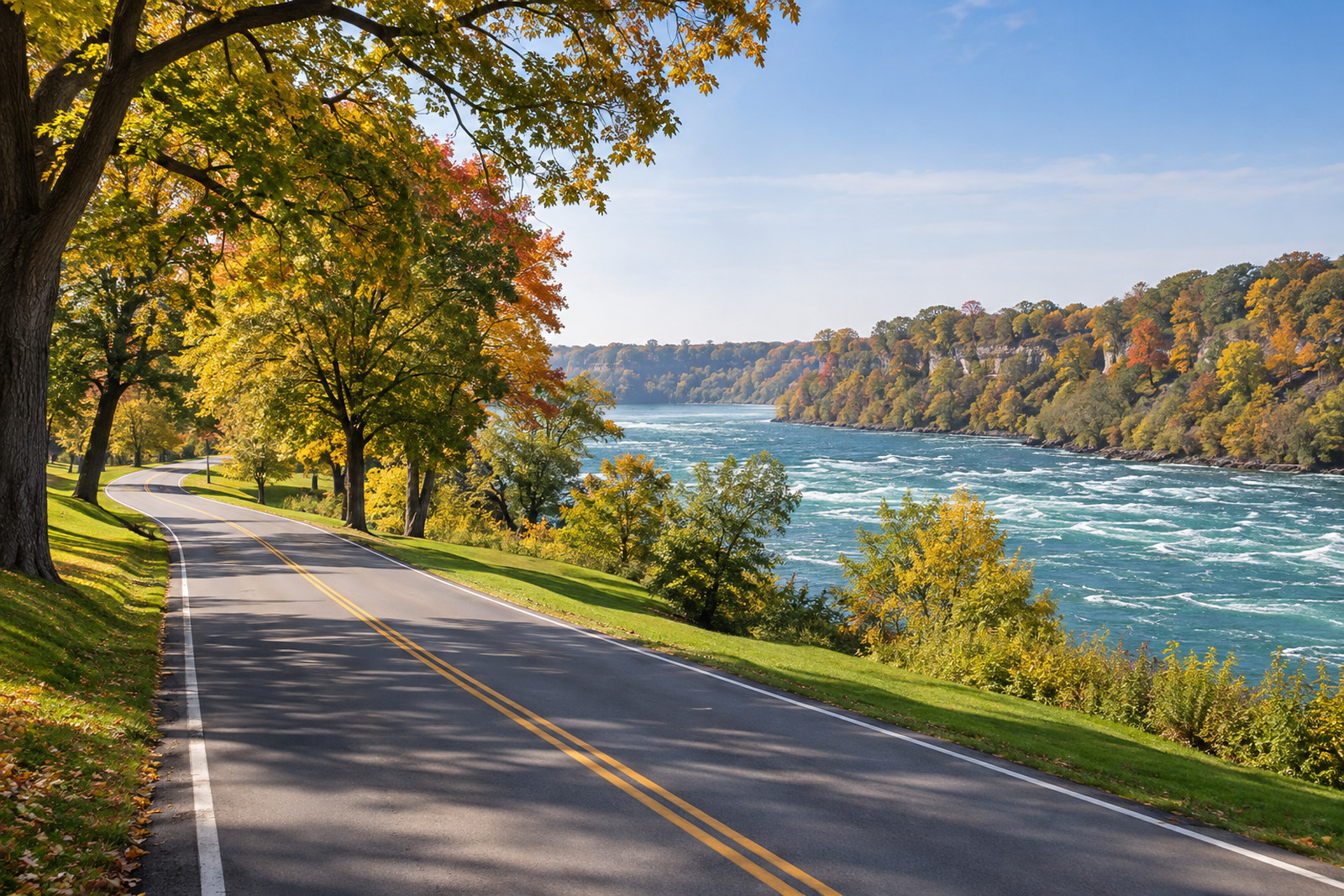
The free-access principle did not stay confined to the park around the falls. It extended along the river as the Niagara Parkway, which now runs roughly 55 to 56 kilometres from Fort Erie up to Niagara-on-the-Lake. Driving it end to end means following the river for its full length on the Canadian side, past the falls themselves and well beyond them in both directions.
The Parkway rewards a slower pace than most travellers give it. It works as a scenic drive taken in one stretch, but it also works broken into pieces: the falls end, a middle section along open river, and a run up toward the historic town at its northern tip. None of those stretches charge for the road or the view from it, which is unusual enough among riverfront drives on either side of the border that it is worth stating plainly rather than assuming.
A phrase that gets attached to the drive
Winston Churchill did travel through the region in August 1943, and a line calling this the prettiest Sunday afternoon drive in the world is often attributed to him on that trip. No wartime source actually records him saying it. The only place the quote reliably surfaces is Niagara Parks marketing material, decades after the visit it is tied to. Treat it as a phrase attached to his name rather than a documented fact, and it is worth knowing that origin before repeating it as history. Either drop the line altogether, or say plainly that it is a phrase attributed to him with no period record behind it, since presenting it as something he was documented saying is the kind of small error that undermines everything else on the page.
Free water, priced attractions
What makes the Canadian bank unusual is the contrast it holds inside a single stretch of riverfront. The park, the promenade, and the Parkway itself carry no entry fee, a direct line back to the 1885 commission's decision. Around and inside that free strip, individual attractions, boat tours, observation towers, museums, do charge admission, much as the rival operators once did before the commission existed. The difference is that today paying or not paying is a choice made attraction by attraction, not a toll on reaching the water at all.
Walking it versus driving it
The Parkway was built as a road, and most visitors experience it from a car, but long stretches run alongside a walking and cycling path close enough to the water that the two ways of covering the distance overlap for much of the route. A traveller with a full day can drive the whole 55 to 56 kilometres and still stop to walk the sections nearest the falls, since nothing about the free-access rule changes with how a visitor arrives.
What the commission set in 1885 was not just a park boundary but a habit that has held for over a century: on this stretch of river, looking is free, and everything else is optional.
Résumer cet article avec :
Partager :